
Planning a project in Trotwood
For a Trotwood repair request, mention recurring moisture, movement or seasonal sticking. Those clues help identify what must be resolved before patching, caulking or repainting the visible surface.
Trotwood · Buildings & backstory
Railroad roots and the changing shape of local commerce
A railway stop gets a new name
Trotwood began as Higgins Station, a railroad stop in the early 1850s. In 1866, Lewis Pfoutz applied for a post office; the city charter recounts that he suggested the name Trotwood after a character in Charles Dickens’s David Copperfield.[1]
A village becomes a wider city
Trotwood incorporated in 1901, attained city status in 1971 and merged with Madison Township in 1996. The present city therefore includes several generations of development.[1]
Salem Avenue’s retail era
Salem Mall opened in 1966 with about 60 retailers. Its later decline and demolition changed the corridor again, leaving a major redevelopment site.[2]
Olde Town and the commercial corridor
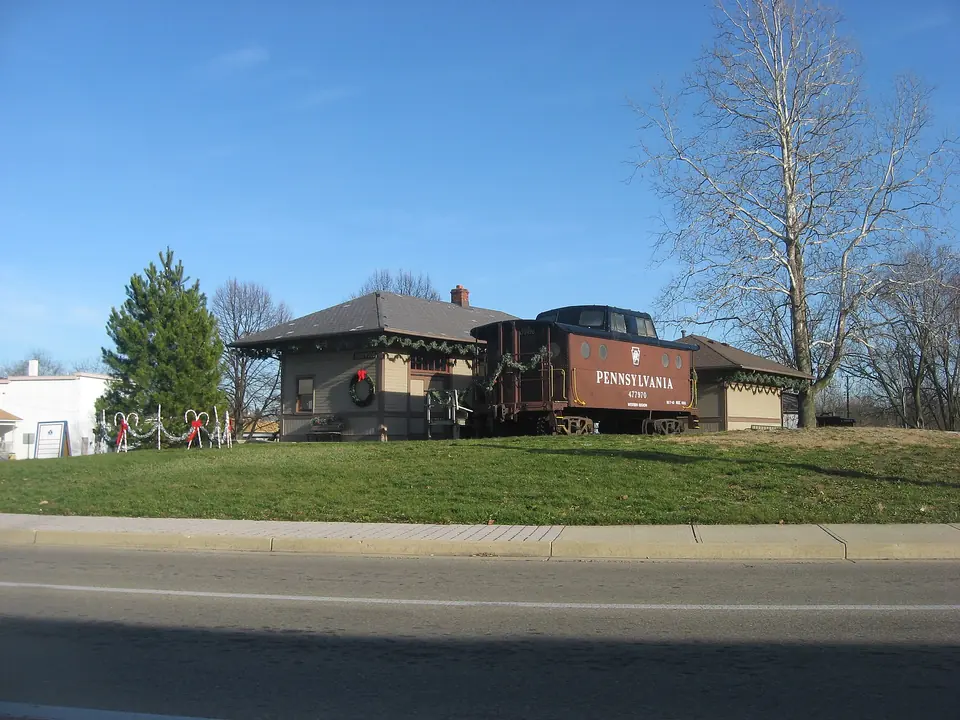
Olde Town’s depot dates to 1912. Along the later commercial corridor, architect Fred F. Wennlund’s former Sears building, designed around 1966, represents New Formalism: a more monumental approach to a suburban department store.[5][3]
Repair the individual detail
Keeping sound original materials and repairing individual elements can preserve a building’s familiar appearance. This is especially helpful when a street contains buildings from different periods.
Prepare the surface properly
For masonry, water management and compatible mortar matter more than a quick surface treatment. For painted trim, sound preparation and finding the cause of peeling help the new finish last.[4]
A growing town and changing retail economy
The village grew from 348 residents in 1910 to 1,066 in 1950, reaching 6,997 when it became a city in 1971. The later loss of major retail employers brought another adjustment for households and local businesses.[5][2]
From mill owners to town platters
Amos Higgins acquired Daniel Weymeyer’s mill property and later established a station, tavern and inn. Robert Pleasant and Nathan Worley platted the village in 1898, giving later development a street framework.[5]
The care notes describe considerations for these building types, not an inspection of any property. Original materials, later alterations and condition determine the right repair.
Sources & further reading
- City of Trotwood charter: name and history
- Ohio EPA: Salem Mall site history
- Ohio Department of Development: former Sears architecture
- National Park Service: caring for brick masonry
- Trotwood Historical Society: mills, railways and town growth
Historical sources reviewed October 2026. Population figures refer to the year and area stated.
Where to begin
Tile, grout and caulking
Refresh the joints that do the hard work.
↗Drywall repair
Make damaged walls feel finished again.
Your Trotwood project checklist
- Note when moisture, cracking or sticking first appeared and whether it keeps returning.
- Show the surrounding area as well as the visible damage.
- Resolve the cause before approving patching, sealant or repainting as the final repair.
Local project questions
What should I send for a Trotwood quote?
Use the checklist above, your ZIP code and a short description of the outcome you want. John reviews the scope, materials, access and availability with you before a visit is agreed.
Is a visit automatically booked online?
No. Use the project form, call or text to request a quote. A visit is scheduled only after you discuss availability and agree on the scope.