
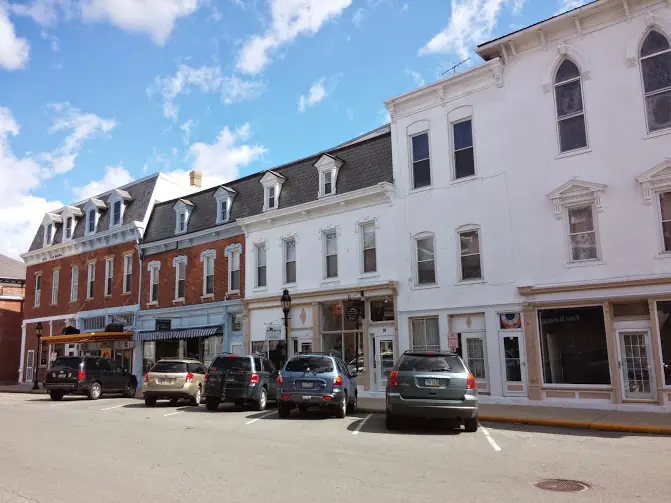
Planning a project in Germantown
For a Germantown property, group tasks by access and weather needs. Outdoor cleaning, seal checks and indoor touch-ups can be prioritized around the condition of the home and the available work window.
Germantown · Buildings & backstory
A mill, a town plan and generations of skilled work
Families arrive from Pennsylvania
German-speaking families from Berks County, Pennsylvania, established Germantown in 1804. Philip Gunckel chose a mill site and laid out the town plat in 1814, creating the core of the community.[1]
Gunckel, Shuey and the working mill
Gunckel was the founding miller and town planner. His son-in-law Lewis Shuey bought the mill in 1830 and rebuilt it in 1845. The site later became a cigar plant and warehouse, showing how a building could serve several industrial lives.[2]
The mill gives the town direction
Gunckel built a sawmill and gristmill, then laid out Main Street leading from the mill. The street pattern connected homes and trade to a practical source of work.[2]
A changing industrial economy
Distilling and tobacco processing became important employers. Germantown had cigar factories and warehouses, with tobacco-related work continuing into the twentieth century.[1]
A community supported by skilled work
The early families brought language, religious traditions and building skills from Pennsylvania. Milling and later manufacturing supported the population as businesses changed, tying the fortunes of households to the town’s workshops and factories.[1]
The town plan is part of the architecture
The Gunckel Town Plat retains nineteenth- and early-twentieth-century buildings. Its distinctive alley pattern and the surviving three-story Shuey Mill help explain the relationship between the historic town and its businesses.[1][2]
Original materials, recognizable streets
Traditional masonry, wood windows and recognizable street-front proportions give the historic core a strong identity. Keeping serviceable components can make repairs more consistent with that setting.
Start at the roof edge and openings
Old brick should not be treated like modern hard masonry. Compatible mortar and gentle cleaning matter, while water entry at roof edges and openings should be addressed before repainting surrounding woodwork.[3]
The care notes describe considerations for these building types, not an inspection of any property. Original materials, later alterations and condition determine the right repair.
Sources & further reading
- Municipality of Germantown: community history
- Municipality of Germantown: town tour and Shuey Mill
- National Park Service: caring for brick masonry
Historical sources reviewed October 2026. Population figures refer to the year and area stated.
Where to begin
Pressure washing
Reveal a fresher outdoor surface.
↗Seasonal home maintenance
A little attention before the next season.
Your Germantown project checklist
- Separate outside cleaning and seal checks from interior touch-ups.
- Identify tasks that depend on dry weather, daylight or access to an outdoor water supply.
- Agree on the order of repairs and the condition required before applying finishes.
Local project questions
What should I send for a Germantown quote?
Use the checklist above, your ZIP code and a short description of the outcome you want. John reviews the scope, materials, access and availability with you before a visit is agreed.
Is a visit automatically booked online?
No. Use the project form, call or text to request a quote. A visit is scheduled only after you discuss availability and agree on the scope.