
Planning a project in Oakwood
For an Oakwood home with existing decorative trim, start with close-up profile photos and dimensions. Matching a casing or repairing a door deserves a plan that respects the surrounding finishes.
Oakwood · Buildings & backstory
The details that make an Oakwood street
From estates to residential streets
Oakwood’s early estates and small residential plats grew into a close-knit suburban community. Horsecar service began in 1871, electric service followed in 1895, and the village had just 67 homes when it incorporated in 1908.[1]
Shafor, Patterson and a shared gathering place
Walter Shafor developed residential land near today’s community center. In 1919, NCR leader John H. Patterson approached him about land for a neighborhood gathering place. Residents helped finance the project, showing how private development and community effort worked together.[4]
Higher ground, faster growth
After Dayton’s 1913 flood, hilltop Oakwood attracted more homebuilding. Growth in the 1920s and 1930s helped establish the streets and houses that still define much of the city.[1]
A neighborhood shopping street
Far Hills Avenue developed a small commercial strip with early and mid-century buildings, while Park Avenue gained a cluster of shops near the municipal building.[2]
The appeal of life on the hill
This was an era of changing expectations for home life: more green space, modern kitchens and bathrooms, and convenient travel into Dayton. Oakwood’s landscaped boulevards and revival-style houses reflect those ambitions.[3]
Recognizing Oakwood’s house styles
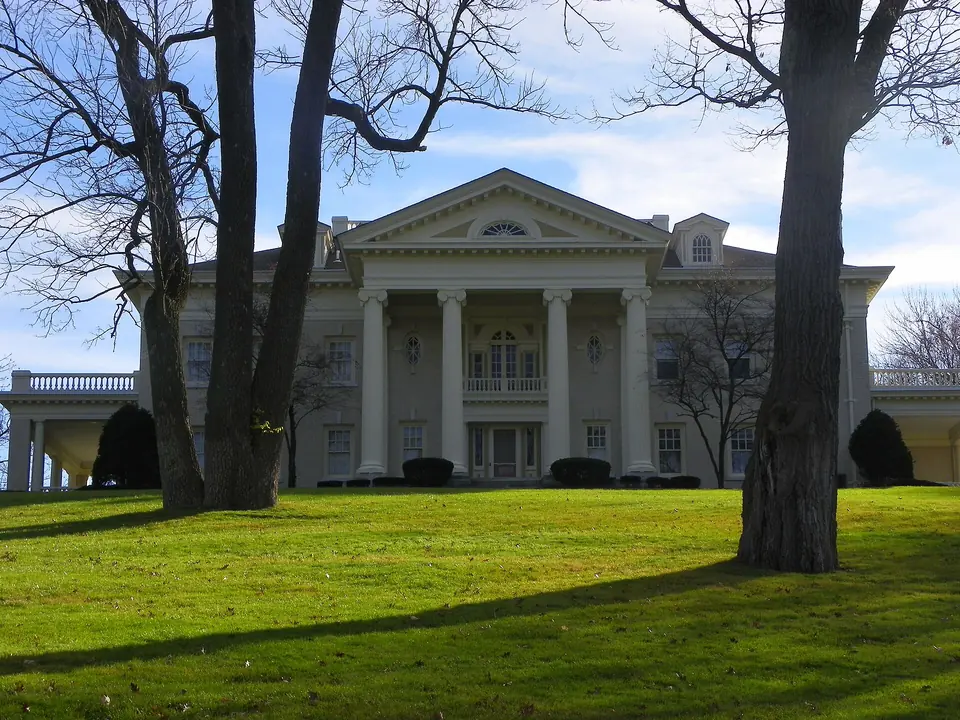
Tudor and Colonial Revival houses sit alongside Craftsman, Prairie, Mission and other styles. Their window patterns, woodwork and masonry are part of the street’s character, not interchangeable decoration.[3]
Keep the original proportions
Well-proportioned original windows and repairable wood details can make a careful repair more sympathetic than a wholesale replacement.[5]
Give woodwork a closer look
Check painted wood, glazing and joints for water entry. With mixed materials, the repair should suit each surface; replacing a damaged section requires matching its profile as well as its color.[5]
The care notes describe considerations for these building types, not an inspection of any property. Original materials, later alterations and condition determine the right repair.
Sources & further reading
- Oakwood Historical Society: a brief history
- Ohio History Connection: Dayton modern architecture survey
- Oakwood Historical Society: local architecture
- Oakwood Historical Society: the community center story
- National Park Service: evaluating historic windows
Historical sources reviewed October 2026. Population figures refer to the year and area stated.
Where to begin
Trim and finish carpentry
Small details. A more finished home.
↗Door repair and installation
Get doors closing the way they should.
Your Oakwood project checklist
- Send close-up photos of decorative trim, corners and transitions you want preserved.
- Measure the width and depth of the existing profile before looking for replacements.
- Discuss repair versus replacement and how adjoining paint or stain will be matched.
Local project questions
What should I send for a Oakwood quote?
Use the checklist above, your ZIP code and a short description of the outcome you want. John reviews the scope, materials, access and availability with you before a visit is agreed.
Is a visit automatically booked online?
No. Use the project form, call or text to request a quote. A visit is scheduled only after you discuss availability and agree on the scope.